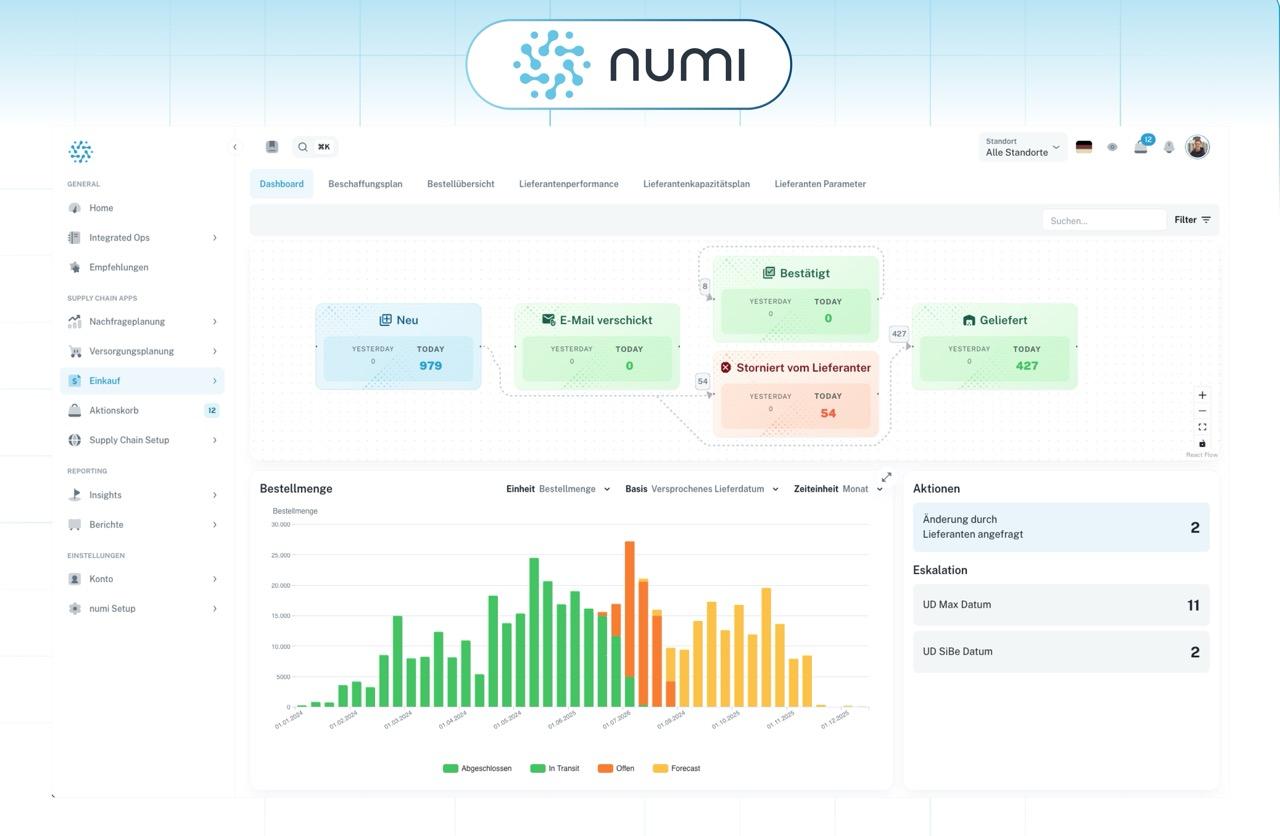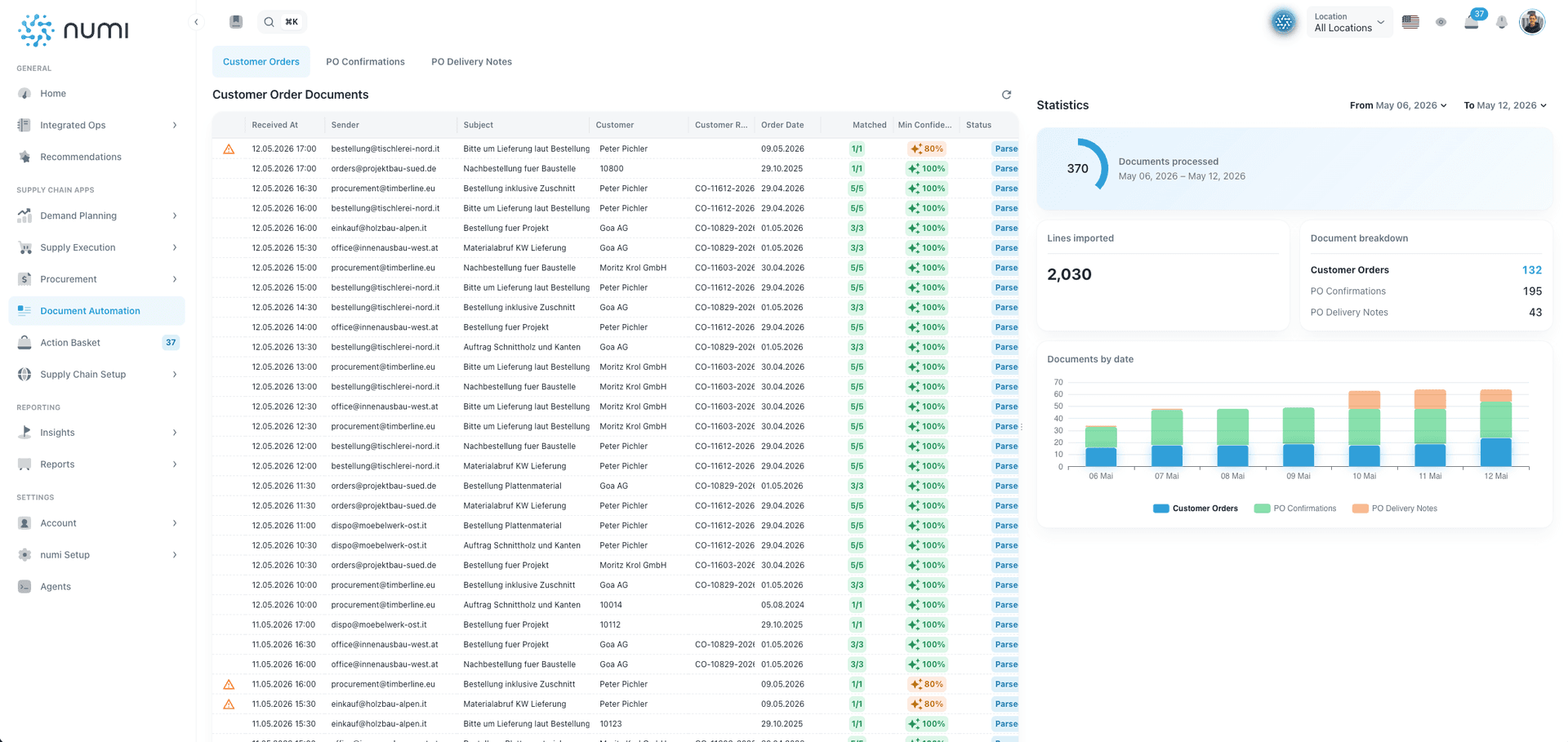

Everyone is talking about agents.
Over the past months, agent-based systems have become one of the most discussed topics in software.
The idea is simple:
- systems that make decisions
- trigger actions
- run processes end to end
In many domains, this works well, especially where language and ambiguity play a central role.
But supply chains work differently.
In supply chain management, decisions are rarely subjective.
They depend on:
- demand patterns
- lead times
- service levels
- cost structures
A forecast needs to be numerically correct. A replenishment decision needs to be consistent and reproducible. A missed delivery needs a clearly defined response.
AI is extremely valuable in this context. But the type of AI matters.
The AI behind real decisions
Modern supply chain systems already rely on advanced models such as:
- statistical forecasting
- machine learning models such as LightGBM or XGBoost
- optimization logic
- rule-based decision frameworks
These approaches work because they are:
- precise
- explainable
- built for structured data
They generate high-quality decisions every day.
The real gap: execution
Despite all this intelligence, many processes still stop at the same point: the recommendation.
Planners see order proposals, parameter changes, and alerts. But the final step is still manual.
This leads to:
- delays
- inconsistencies
- unnecessary operational work
From recommendations to actions
This is where agents become relevant in supply chain management.
Not as systems that replace decision logic. But as systems that execute it.
Instead of asking "What should we do?", the better question becomes:
Why are we still doing this manually?
A different kind of agent
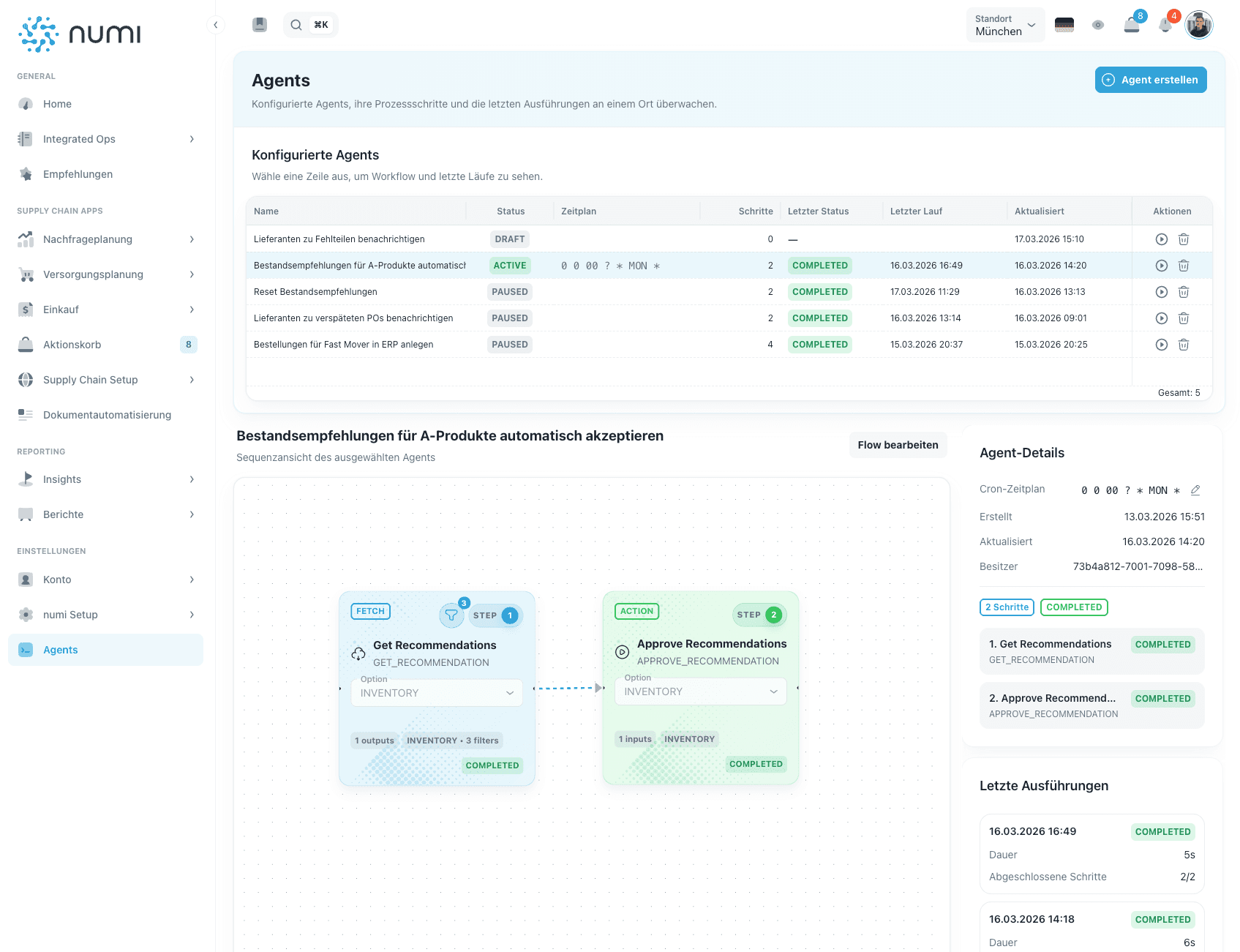
At numi, agents act as an orchestration layer on top of proven decision systems.
They take outputs from forecasting and optimization, apply defined rules, and trigger actions across systems.
Examples include:
- automatically creating purchase orders in ERP systems
- adjusting safety stock or lead times
- notifying suppliers about delays
- triggering workflows based on real-time events
How this works in practice
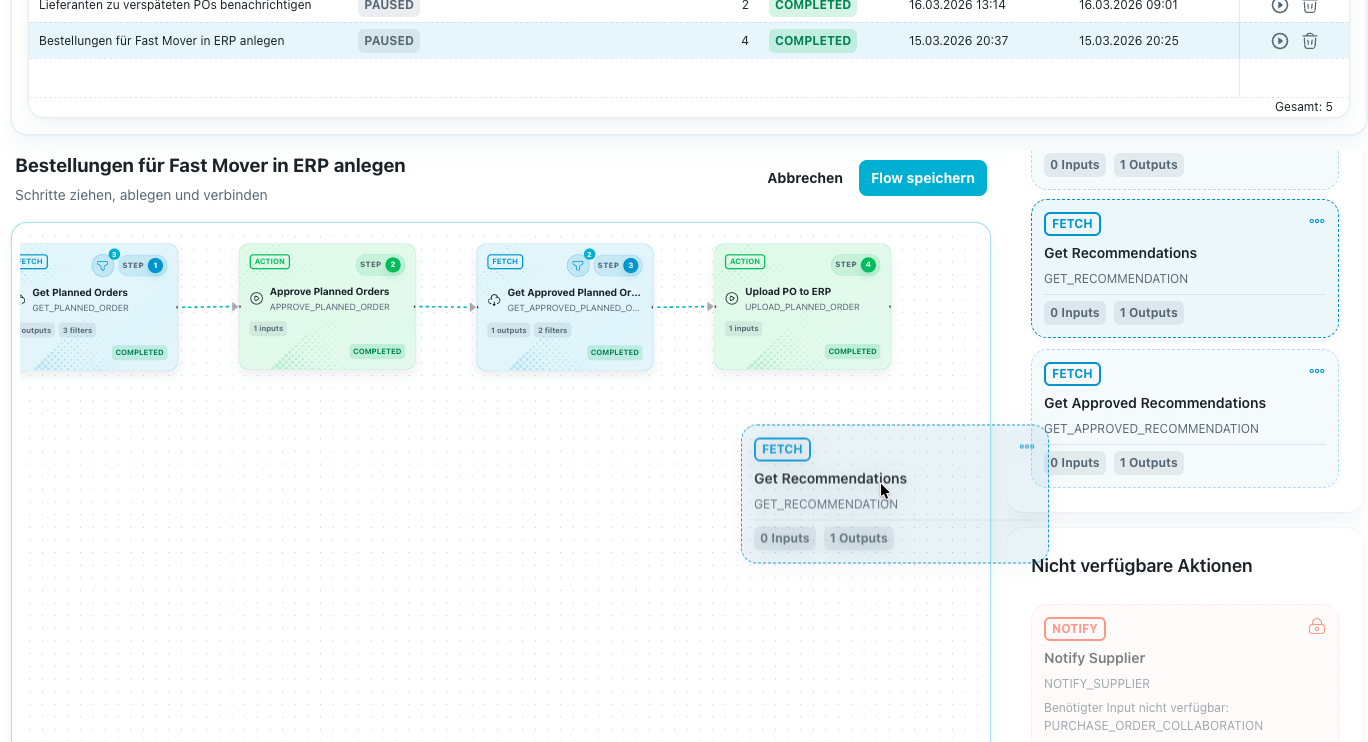
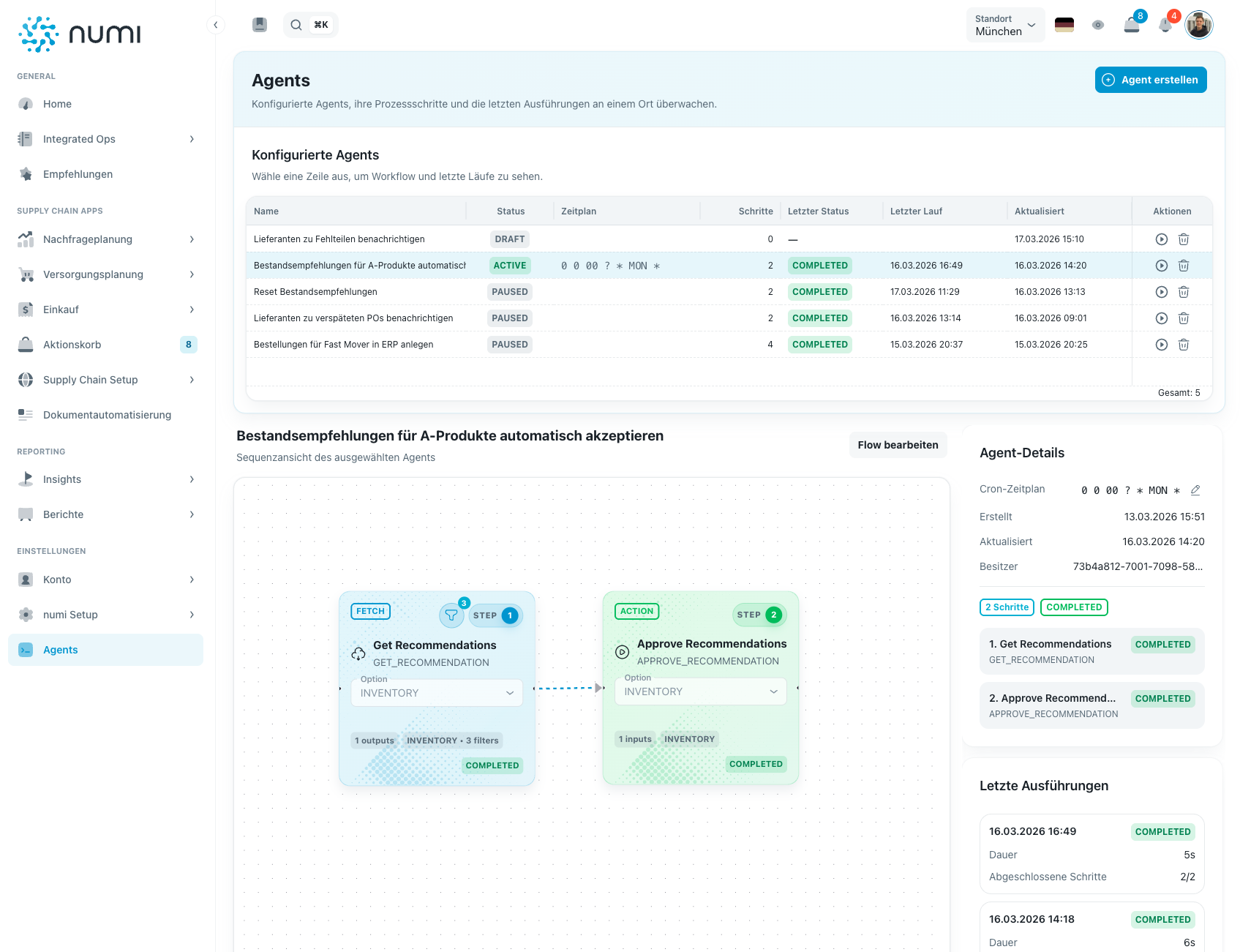
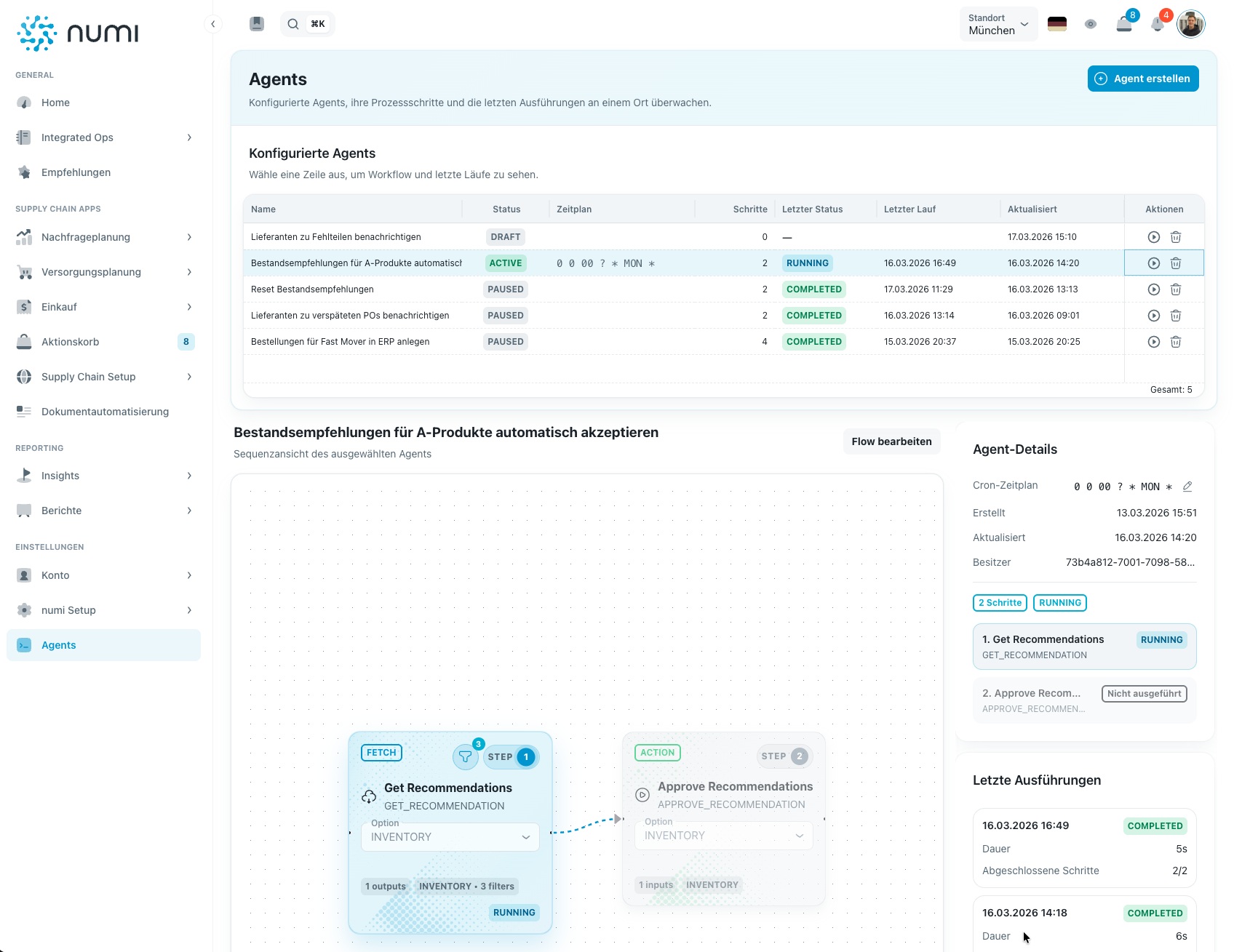
In numi, agents are configured as simple workflows.
A typical setup looks like this:
- Define the trigger
For example new order proposals or delayed deliveries. - Configure the workflow
Combine steps such as filtering, approvals, or actions. - Connect actions
For example ERP updates or supplier notifications. - Schedule execution
Run agents at defined intervals or based on events.
Once set up, agents run in the background and only surface exceptions when intervention is required.
Automation with control
Not every process should be fully automated immediately.
That is why agents can operate in different modes:
- fully automated execution
- approval-based workflows
- monitoring and alerting
This allows teams to gradually increase automation based on trust in the underlying models.
The role of language models
Language models still play an important role.
They are useful for:
- interpreting unstructured data
- generating explanations
- supporting user interaction
But for core operational decisions, structured models and deterministic logic remain essential.
The strongest systems combine both.
The future of supply chain systems
The next generation of supply chain software will not be defined by better dashboards.
It will be defined by execution.
Systems that:
- understand data
- generate high-quality decisions
- execute them automatically
- surface only the exceptions that require human attention
Conclusion
Agent-based systems are an important step forward.
In supply chains, the real value comes from combining proven decision models with automated execution.
Because in the end, it is not about better recommendations.
It is about better outcomes.
If you want to experience how numi's agents work in practice, the fastest next step is to see them live in your own supply chain context.