-20–30%
inventory value
through dynamic safety stock, optimized reorder points, and clear segmentation logic.
numi automatically analyzes demand, supplier performance, and supply reliability to generate actionable recommendations for modern inventory management.
Inventory cockpit
Inventory risks and recommendations
Inventory value
-23%
vs. last year
Service level
+12%
stabilized
Excess stock
-31%
reduced
Recommendation
Adjust safety stock
Item A-103 · service level impact +4.1%
Review recommendation
Risk detected
Demand spike in 4 weeks
+18% expected demand
Measurable outcomes
numi reduces excess inventory, improves service levels, and prioritizes actions with direct operational impact.
through dynamic safety stock, optimized reorder points, and clear segmentation logic.
because slow movers, excess stock, and unnecessary planning parameters become visible faster.
through earlier detection of inventory risks, demand changes, and critical supply gaps.
through prioritized recommendations, simulations, and direct transfer of relevant actions into ERP processes.
Actual impact depends on starting point, data quality, assortment, and process maturity. In the intro call, we assess the opportunity based on your planning logic.
See how numi analyzes inventory data, prioritizes risks, and generates concrete recommendations for procurement and planning.
Workflow
numi turns inventory management into a repeatable operational workflow: define strategy, analyze data, validate recommendations, and transfer actions into existing ERP processes.
Optimal inventory parameters for every item
Define your inventory targets in numi and simulate their impact to fine-tune planning parameters.
Use automatic ABC, XYZ, and additional attribute-based classification to avoid static parameter settings.
Use inventory segments to automatically organize all stock items so every item follows its optimal inventory strategy.
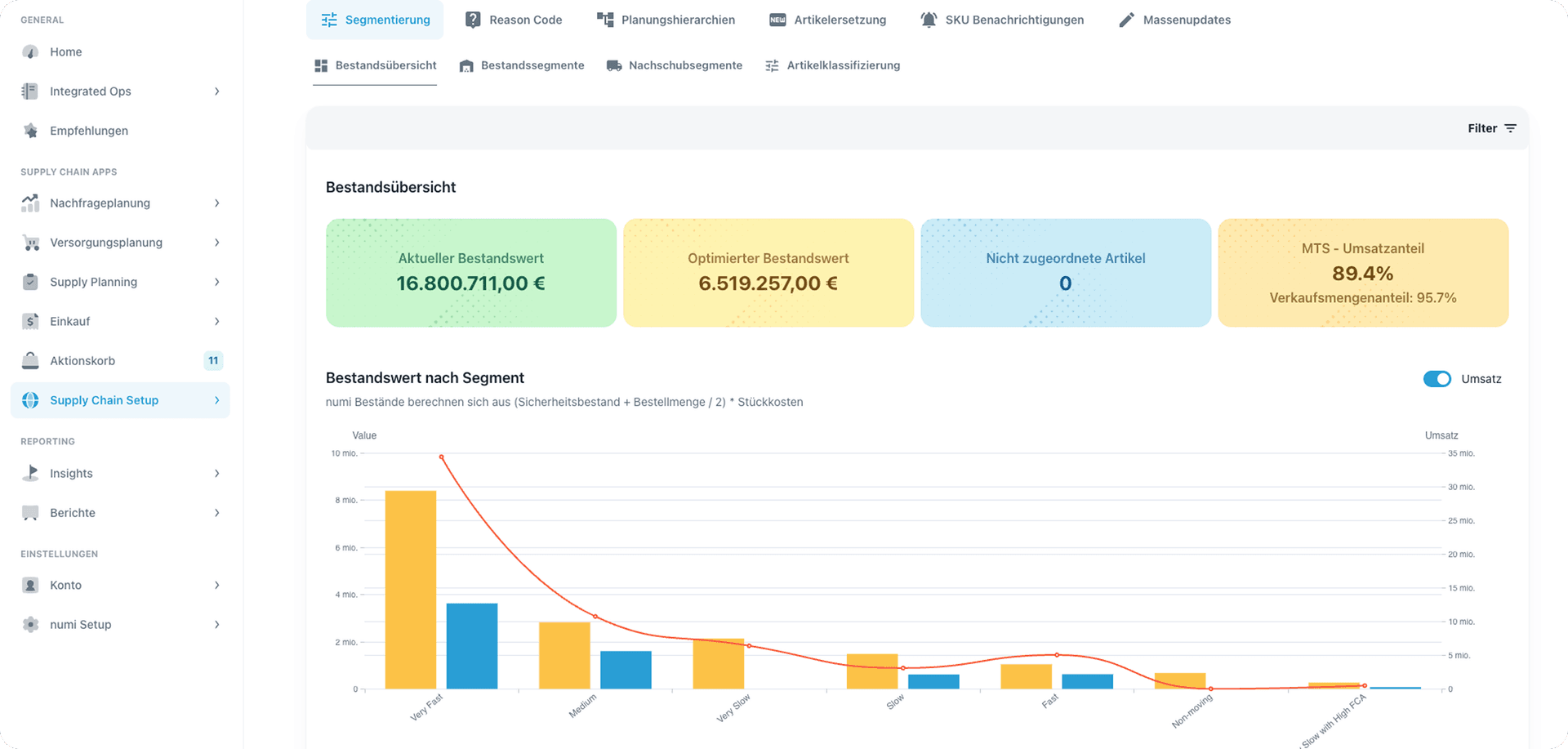
Use the full potential of your data
Use numi’s latest algorithms to calculate optimal safety stocks, reorder points, and order quantities on a daily basis.
Incorporate demand forecasts into safety stock calculations to avoid shortages and excess inventory.
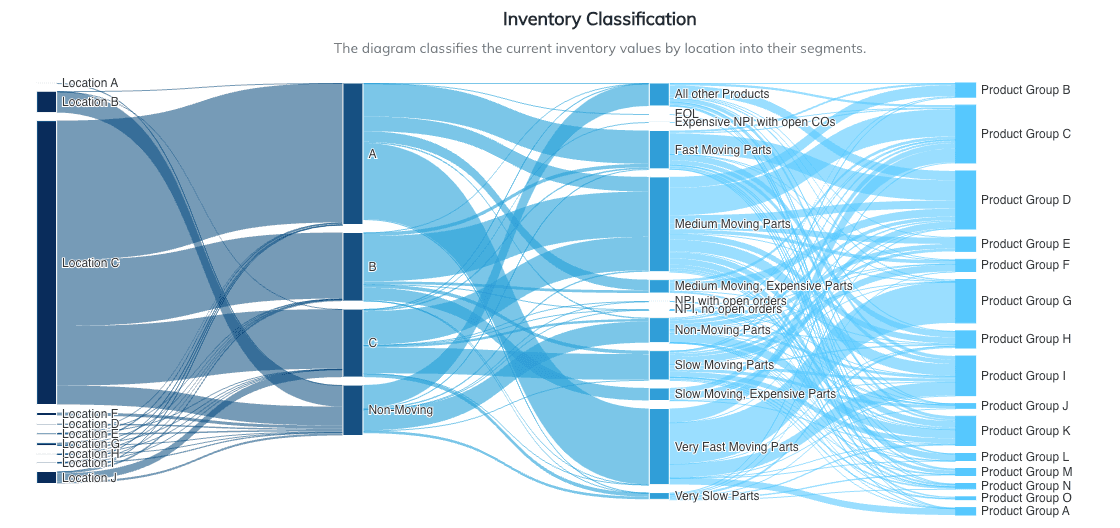
numi optimizes inventory not only locally, but across the entire network and multiple bill-of-material levels. Inventory values can be visualized across locations, ABC and movement classes, product groups, and material flows such as fast-moving, slow-moving, and non-moving parts.
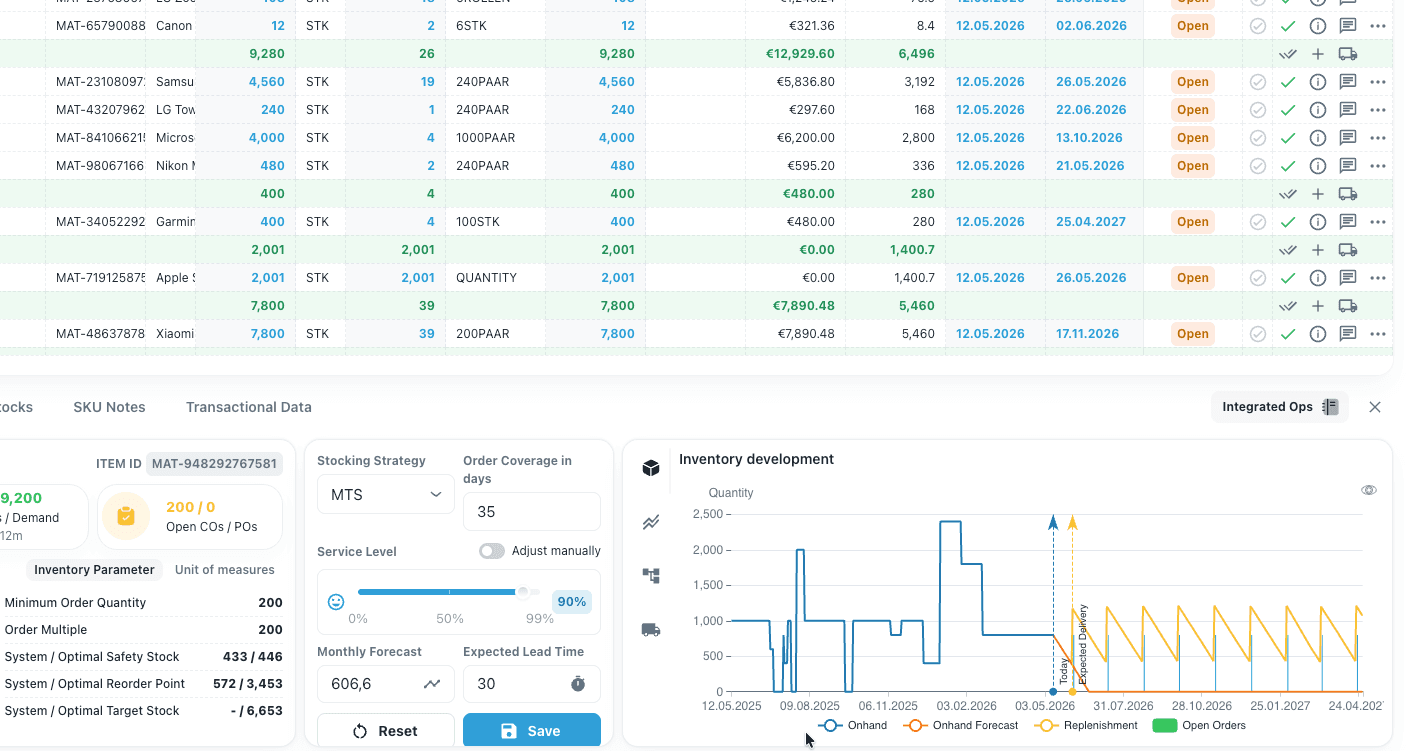
Dynamic safety stocks instead of static ERP parameters
numi calculates dynamic safety stocks, reorder points, and order quantities based on real demand, lead times, and service-level targets.
Teams can transparently evaluate the trade-off between working capital and availability before parameters are transferred into ERP processes.
Optimized safety stock recommendations help reduce shortages, lower excess inventory, and protect service levels across the inventory strategy.
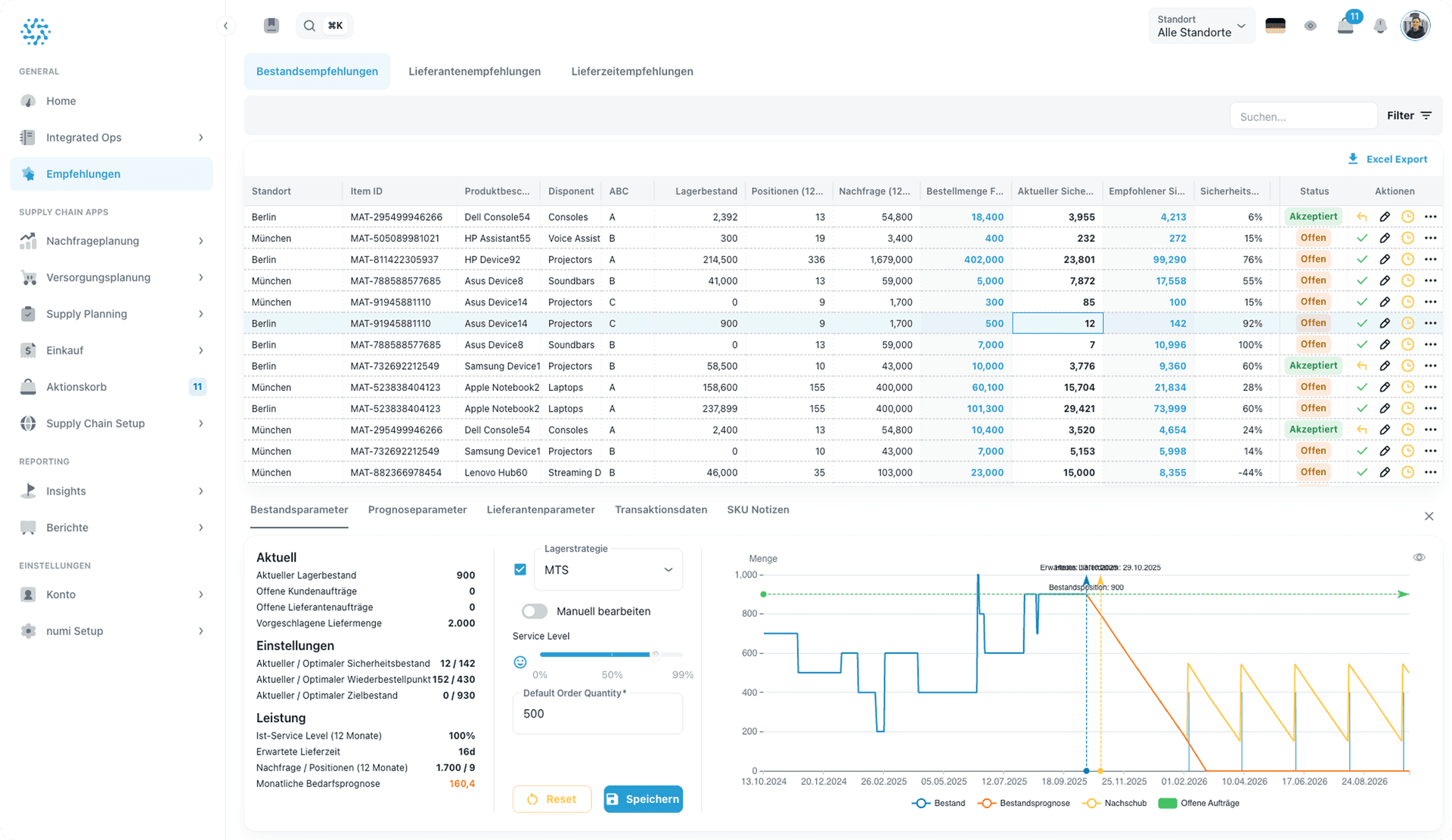
Experience the power of decision intelligence
numi provides daily prioritized recommendations for changes to inventory parameters such as safety stocks, reorder points, order quantities, and lead times.
With real-time simulation of future inventory levels, you can immediately understand the impact of parameter changes.
Through direct integration with your ERP system, adjusted inventory parameters can be transferred directly to avoid manual effort.
Turn approved recommendations into operational processes
Approved parameter changes and recommendations are transferred back into existing ERP and replenishment processes in a controlled way.
Safety stocks, reorder points, order quantities, and planning parameters can be updated without manual transfer errors.
Clear review steps keep inventory optimization traceable, so operational execution follows your existing governance and approval logic.
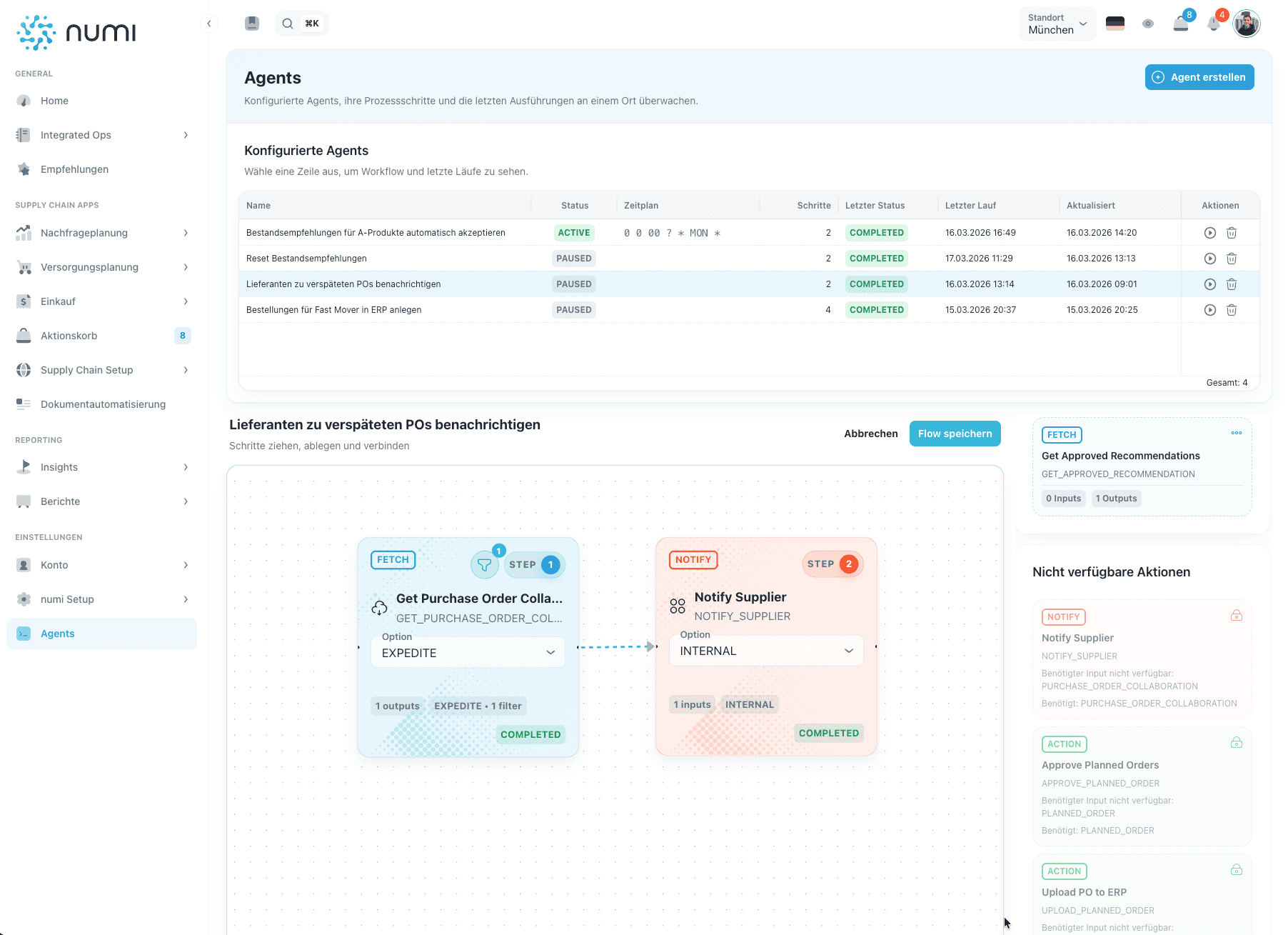
Traditional ERP processes and Excel spreadsheets often show data, but not prioritized actions. numi connects analysis, simulation, and execution in one shared inventory management workflow.
Inventory management is not an isolated process. numi connects demand, suppliers, procurement, and ERP processes in a shared decision layer for prioritized recommendations.
numi Decision Engine
Prioritization active
From forecasts and lead times to safety stocks and ERP execution.

Operational proof
Karl Pichler AG
Digital timber trading with clearer procurement and inventory processes.
numi brings inventory, procurement, and planning decisions into one operational workflow.
Learn how Karl Pichler AG digitizes timber trading with numi and creates more transparent procurement and inventory processes.
Use cases
numi is built for teams that need to optimize inventory levels, protect availability, and embed recommendations into operational planning.
numi reduces excess inventory through data-driven optimization of safety stock levels, reorder points, and order quantities.
The software analyzes historical demand data, current consumption patterns, forecasts, and inventory strategies to calculate dynamic replenishment parameters. This systematically lowers capital tied up in inventory.
The result: less overstock, lower holding costs, and stable product availability.
Yes. With numi, inventory segments and service level targets can be defined individually per product group.
For example, high-value A-items can follow a different replenishment strategy than low-impact C-items. Each segment is aligned with a clearly defined inventory and service objective.
This enables differentiated inventory optimization instead of applying the same safety stock logic across all items.
Yes. Integrated what-if simulations allow you to test changes to safety stock levels, service targets, or lead times before applying them operationally.
The simulation transparently shows the impact on:
This enables data-driven decision-making based on measurable outcomes rather than assumptions.
Yes. numi optimizes multi-location supply networks as well as multi-level bill of materials (BOM) structures.
Dependencies between sites, intermediate components, and finished goods are considered within the inventory planning logic. This allows safety stock and replenishment strategies to be optimized holistically.
The result is reduced systemic overstock and improved service levels across the entire supply chain.
numi integrates seamlessly into existing ERP systems and replenishment workflows via structured interfaces.
Optimization recommendations are displayed transparently, reviewed if required, and then fed back into ERP processes automatically.
This reduces manual planning effort, eliminates data silos, and ensures consistent and audit-proof data processing.
ERP systems primarily manage transactional processes such as purchase orders, bookings, and master data.
numi complements your ERP with AI-driven inventory optimization, dynamic planning parameters, and scenario simulations. While ERP systems record transactions, numi calculates optimal decisions based on demand forecasts and inventory strategies.
All optimization outputs can be seamlessly transferred back into your ERP environment.
numi automatically calculates ABC/XYZ classifications based on your demand and movement data.
Products are segmented by value contribution (ABC) and demand variability (XYZ). Additional attributes can also be incorporated if required.
Based on this classification, differentiated safety stock levels, service targets, and replenishment strategies are applied - enabling precise and efficient inventory management.
Professional inventory management is a key lever for reducing working capital while maintaining high service levels.
By optimizing safety stock and improving demand forecasting accuracy, companies can lower inventory costs without compromising product availability. This strengthens liquidity and frees up capital for growth initiatives.
In volatile markets and complex supply chains, spreadsheets and static rules are no longer sufficient. AI-driven inventory optimization reduces excess stock, minimizes stockouts, and sustainably improves customer satisfaction.
numi supports companies in manufacturing, production, wholesale, retail, e-commerce, and spare parts businesses, especially in complex multi-location environments.
Typical use cases include:
numi is designed for organizations operating complex supply chains with high service and efficiency requirements.
numi is hosted in Germany and complies with GDPR requirements.
The system architecture is designed for high data security, encrypted data transmission, and strictly controlled access rights. Role-based permission models ensure transparency and compliance.
ERP integrations are handled via defined interfaces, ensuring consistent, traceable, and audit-compliant data processing.
Book a personal intro call and clarify where the biggest lever for your inventory decisions lies.