Finished good
FG-900 · customer order
numi screens bills of material across all levels, detects delayed purchased and manufactured parts, and calculates which production orders, customer orders and revenue are at risk.
Supply Risk Cockpit
BOM impact and production risk
Finished good
FG-900 · customer order
Subassembly
SA-310 · production order
Component
MAT-48291
Missing part detected
MAT-48291 · delivery delayed
Production order affected
Revenue risk
€128,000 affected
3 customer orders at risk
Root cause
Delayed PO-450129
Supplier in coordination
Escalated to purchasing
Priority: High
Open supplier portal
Delayed part → BOM impact → production risk → revenue risk → escalation
BENEFITS
numi turns material shortages into concrete production and revenue risks so teams can resolve the most critical missing parts first.
Delayed purchased and manufactured parts are checked across BOM levels before production orders are blocked.
numi traces missing parts through multi-level BOMs to affected production and customer orders.
Affected customer orders and blocked revenue become visible so teams can prioritize by business impact.
Missing parts can be escalated directly to purchasing or supplier coordination workflows.
Actual results depend on BOM quality, ERP data, delivery dates, production structure and process maturity.
See how numi analyzes production orders, prioritizes shortages across all BOM levels, and escalates critical parts automatically to suppliers.
WORKFLOW
numi connects bills of material, inventory, purchase orders, production orders and customer orders into one continuous shortage analysis.
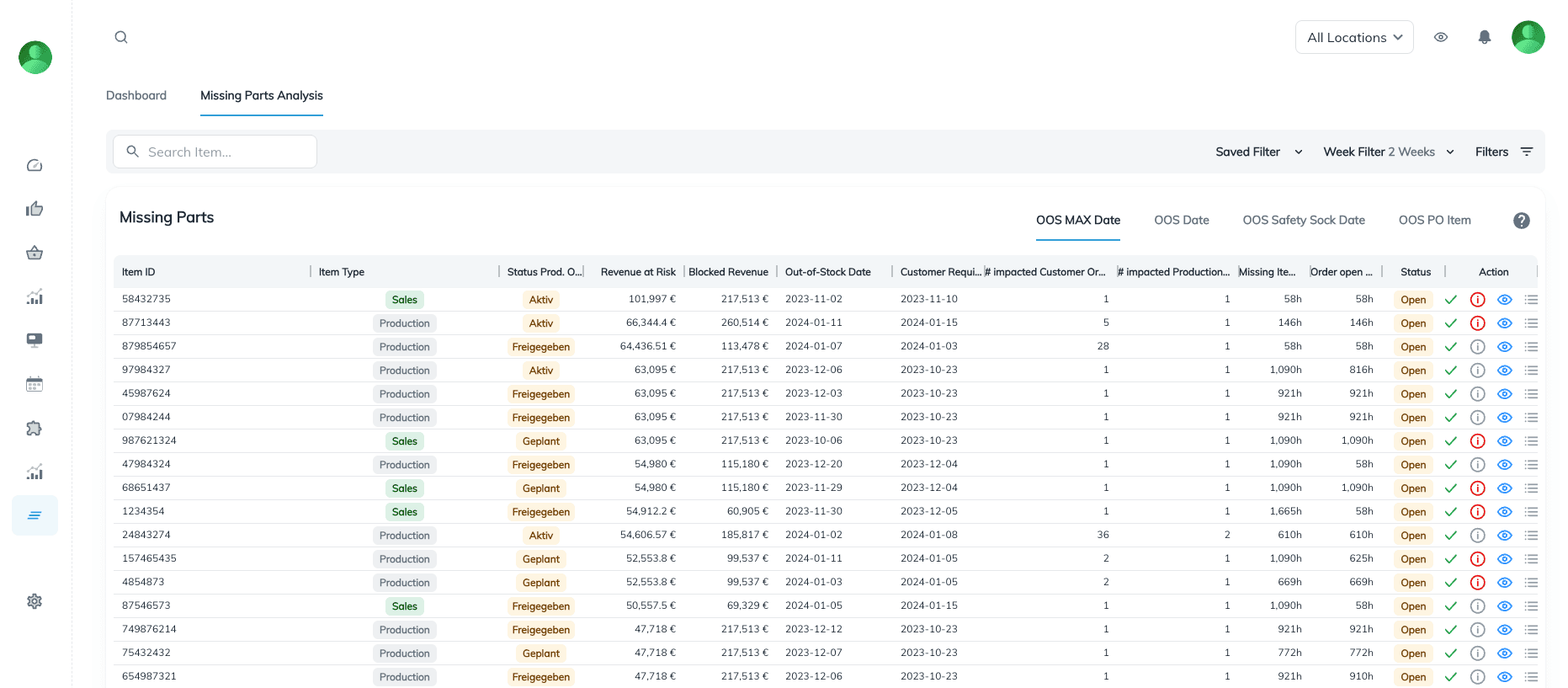
Check material availability across all BOM levels
numi checks components, subassemblies and finished goods across all relevant BOM levels.
Shortages are detected whether the root cause is a delayed purchase order or production order.
Inventory, reservations, open purchase orders and open production orders are included in the analysis.
numi identifies whether a part will arrive on time or put a production order at risk.
Make affected production orders and bottlenecks visible
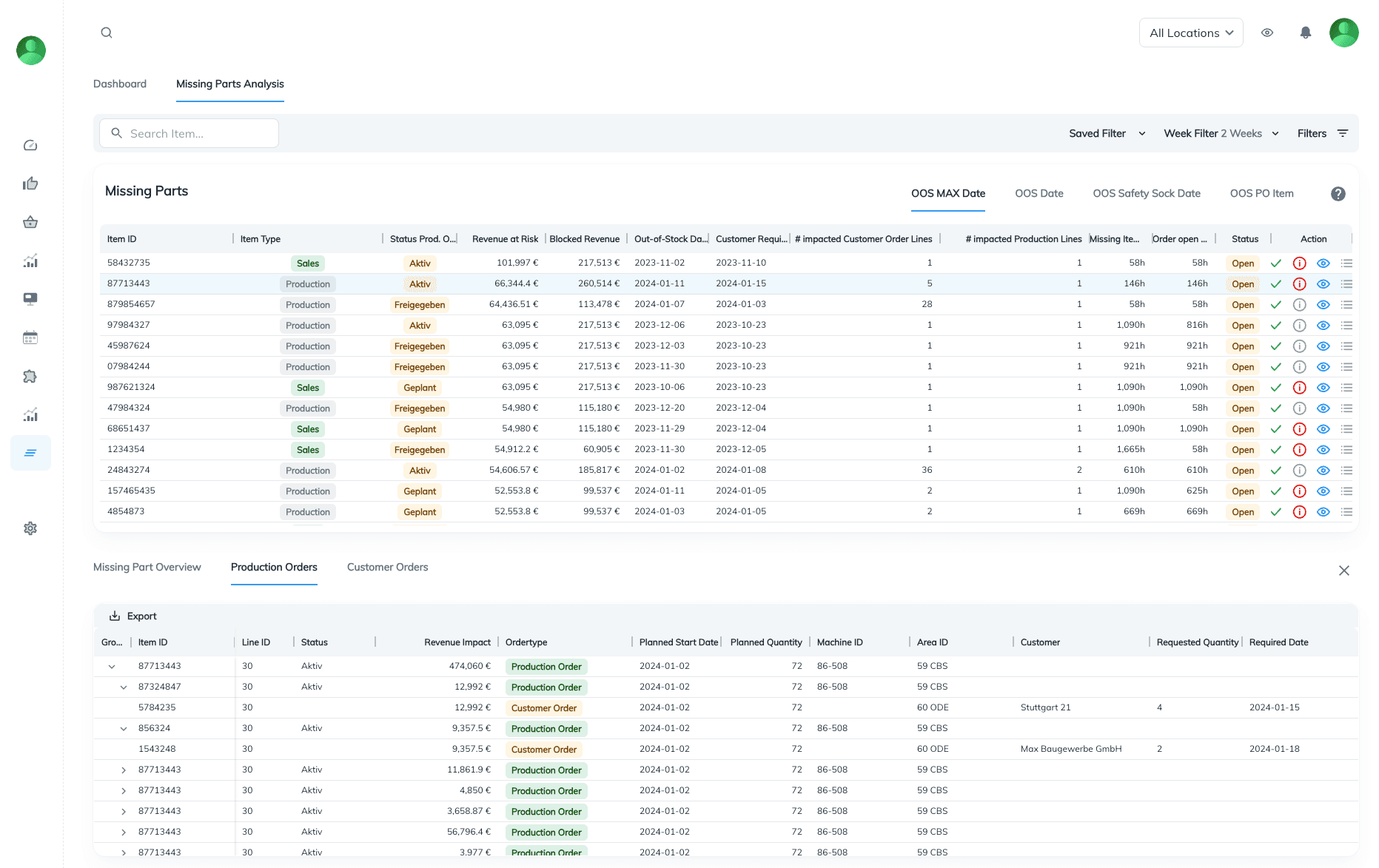
numi shows which production orders are affected by a missing or delayed part.
Material delays are calculated across BOM and production structures.
Teams see whether a bottleneck comes from a purchase order, supplier, production order or inventory issue.
Critical bottlenecks are ranked by production relevance and urgency.
Connect shortages with customer orders and revenue impact
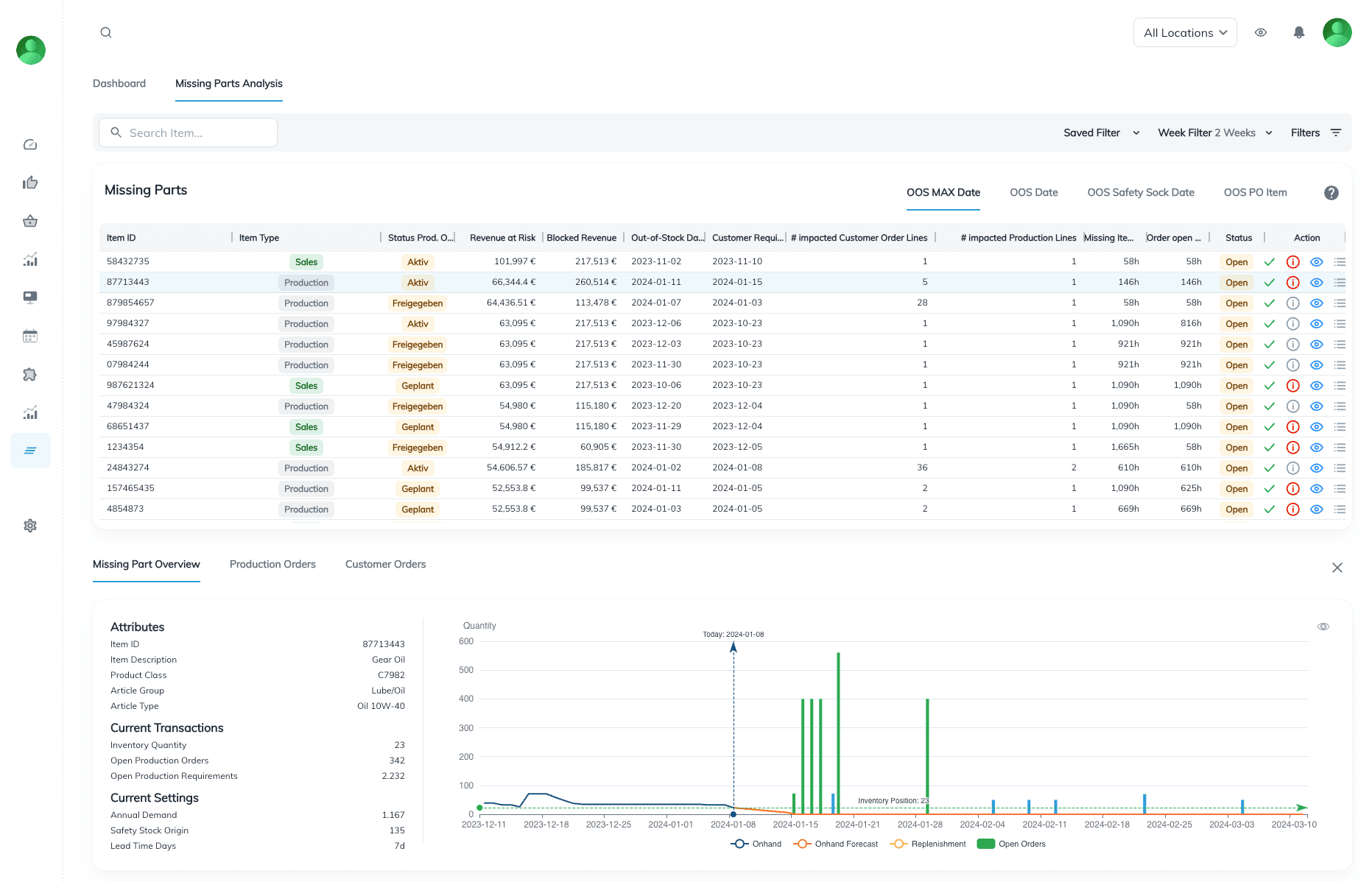
numi connects production risks to the customer orders they put at risk.
At-risk or blocked revenue becomes visible directly at customer order level.
Not every missing part is equally critical - numi ranks by revenue, customer relevance and timing risk.
Teams immediately see which bottlenecks need to be resolved first.
Move shortages directly into purchasing and supplier coordination
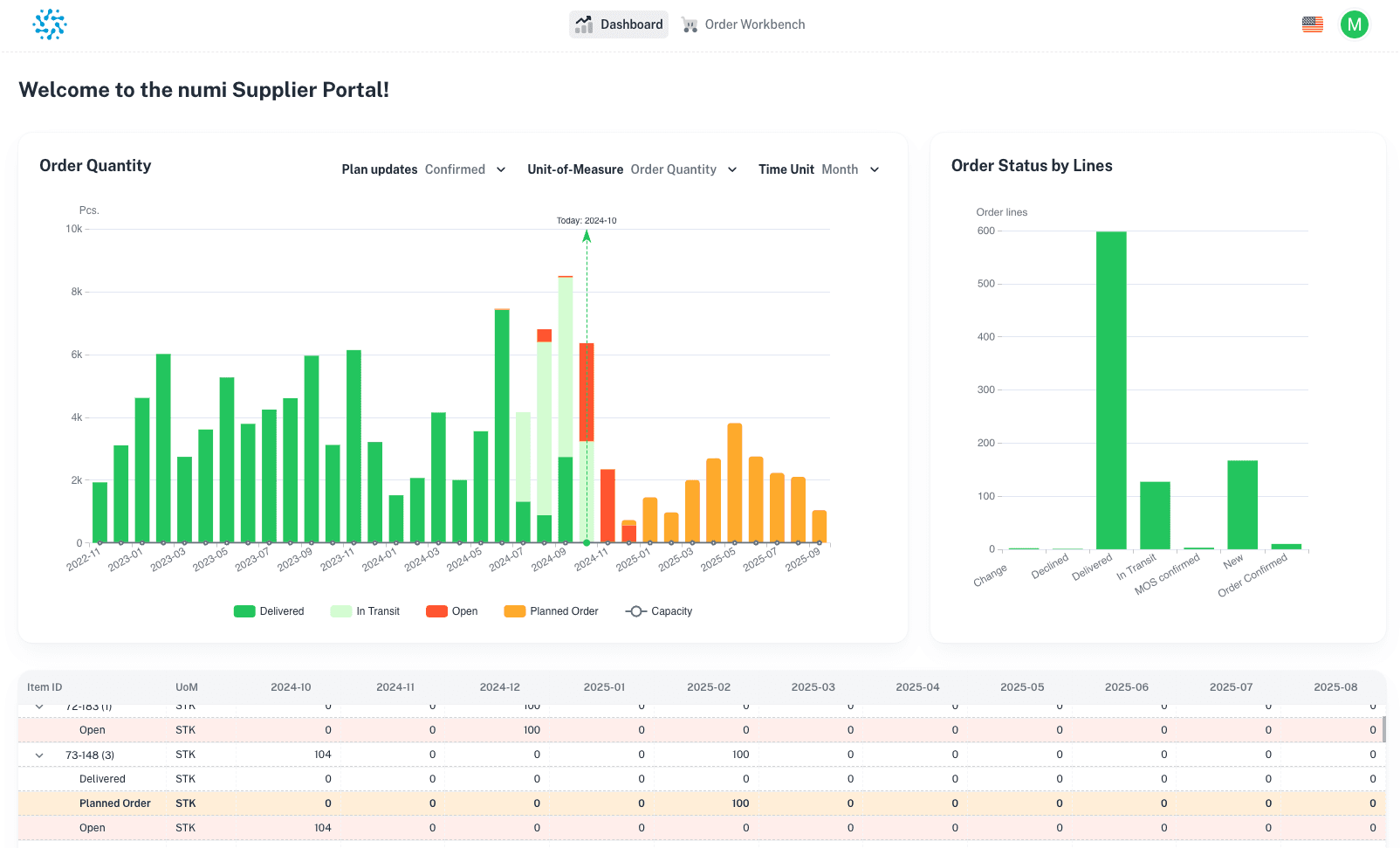
Dispatchers and production planners can pass critical shortages directly to purchasing.
Delayed purchase orders can be coordinated with suppliers through the supplier portal.
Status, ownership and next steps remain transparent.
Once dates, quantities or alternatives are confirmed, the risk is recalculated.
numi connects material availability, BOM logic and customer order impact so teams see not only missing parts, but their production and revenue consequences.
numi combines bills of material, inventory, open purchase orders, production orders, reservations and customer orders to calculate shortages, production risks and revenue impact automatically.
Supply Risk Engine
Risk analysis active
BOM-aware shortage analysis, material availability, production risk, customer order impact, revenue risk and escalation to purchasing or the supplier portal.
Article focus
BOM Impact
Shortage analysis for production and revenue risk
One delayed part can put production, customer orders and revenue at risk at the same time.
A missing part rarely acts in isolation. In multi-level BOM structures, one delayed component can block multiple production orders and put customer orders, delivery dates and revenue at risk. numi analyzes the full BOM structure, connects material availability with production and customer orders, and shows which bottlenecks have the highest operational and financial impact.
Use cases
numi supports teams that want to detect material shortages, production risks and customer order impact early and escalate them in a structured way.
Let us show you how numi analyzes BOMs, calculates production risk and prioritizes critical shortages by revenue impact.