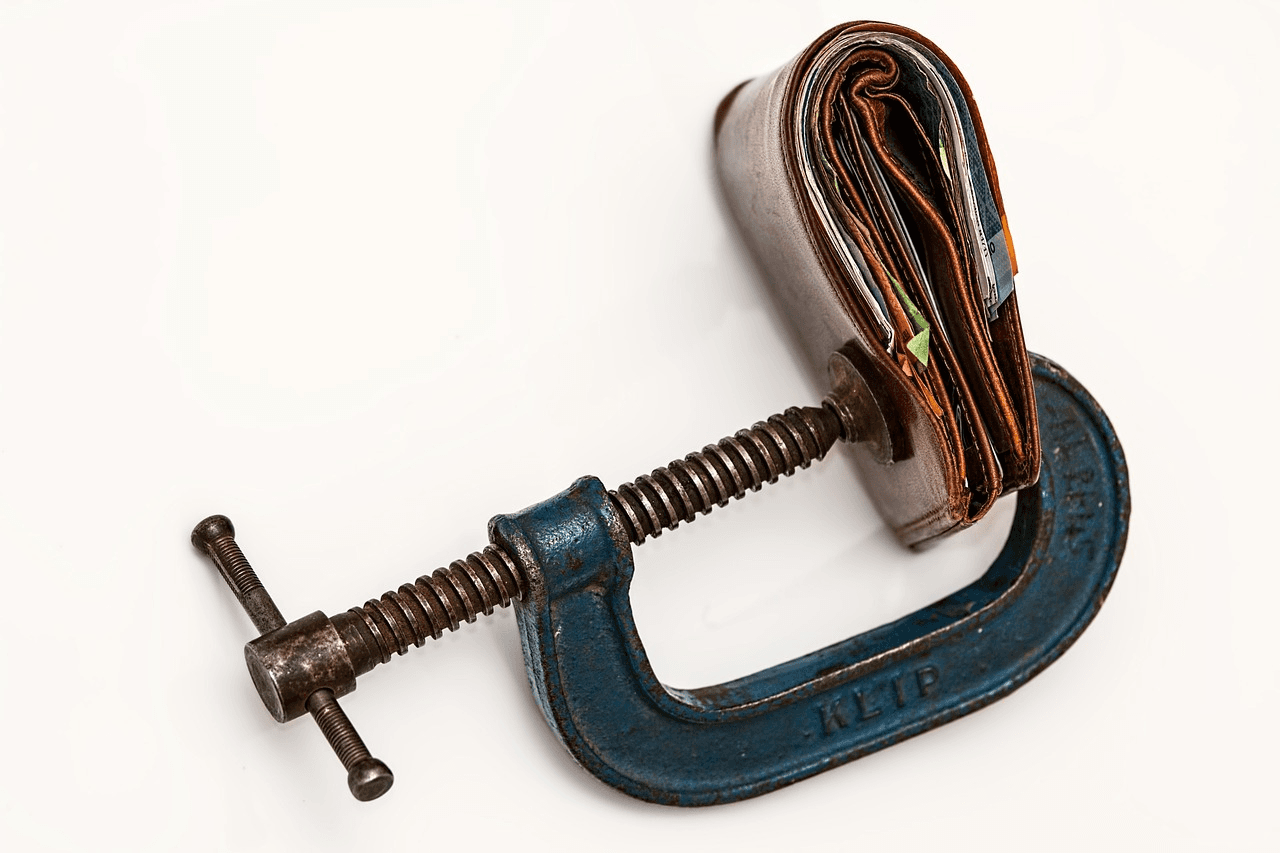

Inventory reduction has become a strategic priority for companies: as interest rates and carrying costs rise, excess inventory ties up valuable capital. This article shows 5 proven strategies to reduce your inventory levels, free up tied-up capital, and maintain service levels at the same time.
Many companies such as Nike (+44%), Walmart (+32%), and Target (+43%) have faced massively elevated inventory levels in recent years – particularly in retail and e-commerce. Excess stock that needs to be sold off directly impacts margin and blocks liquidity.
Over the past decade of low interest rates and low inflation, supply chains have focused on two key metrics:
- Customer fulfillment rates, and
- Marginal supply chain costs.
Now that capital is no longer free, carrying costs and free cash flow are gaining importance. A consistent reduction in inventory levels is one of the most effective levers for improving working capital and profitability.
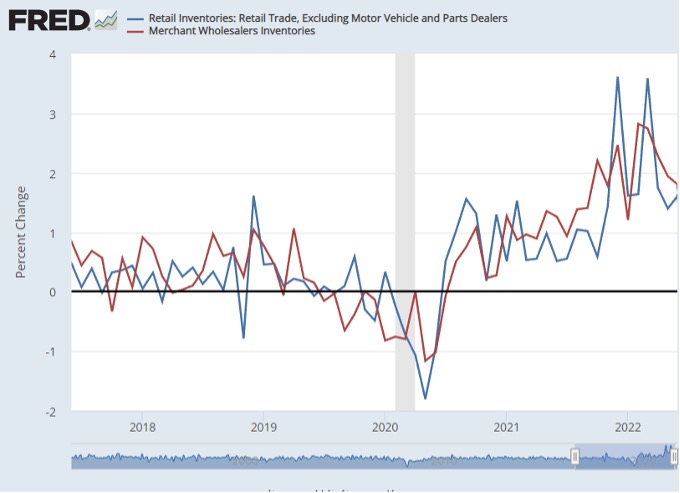
Nike, for example, reported that inventory levels at the end of Q1 2022 had increased by 44 percent year-over-year to $9.7 billion, "driven by elevated transit inventories from ongoing supply chain volatility, partially offset by strong consumer demand during the quarter." [1]
Why inventory reduction matters now
Recent supply chain disruptions on both the demand and supply sides have driven inventory levels to historic highs in many industries. During periods of high demand and tight supply, companies bought as many raw materials and goods as possible to meet customer demand and avoid stock-outs.
The effects are visible in recent demand spikes as well as in supply volatility and longer replenishment lead times:
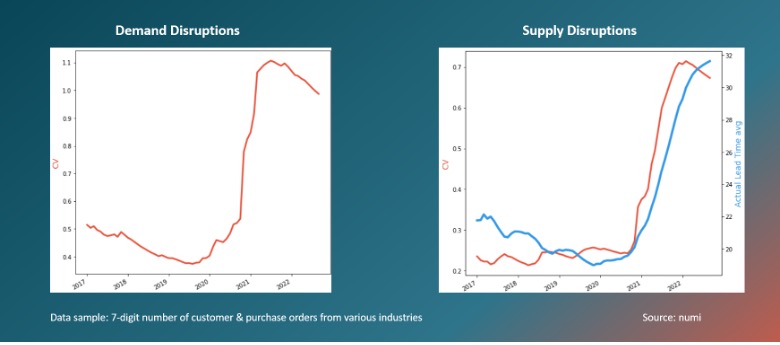
When consumer demand softens, companies quickly run into problems: recession concerns, large open purchase order pipelines, and built-up inventory positions. These elevated inventory levels create operational and financial conflicts:
- Tied-up capital, which leads to cashflow constraints or blocks new investments
- Higher logistics costs through storage, handling, and insurance
- Blocked warehouse capacity, which consumes valuable space needed for fast-moving items
This is why companies need to engage more deeply with inventory reduction strategies – as one of the most important levers in the supply chain for improving operating profit.
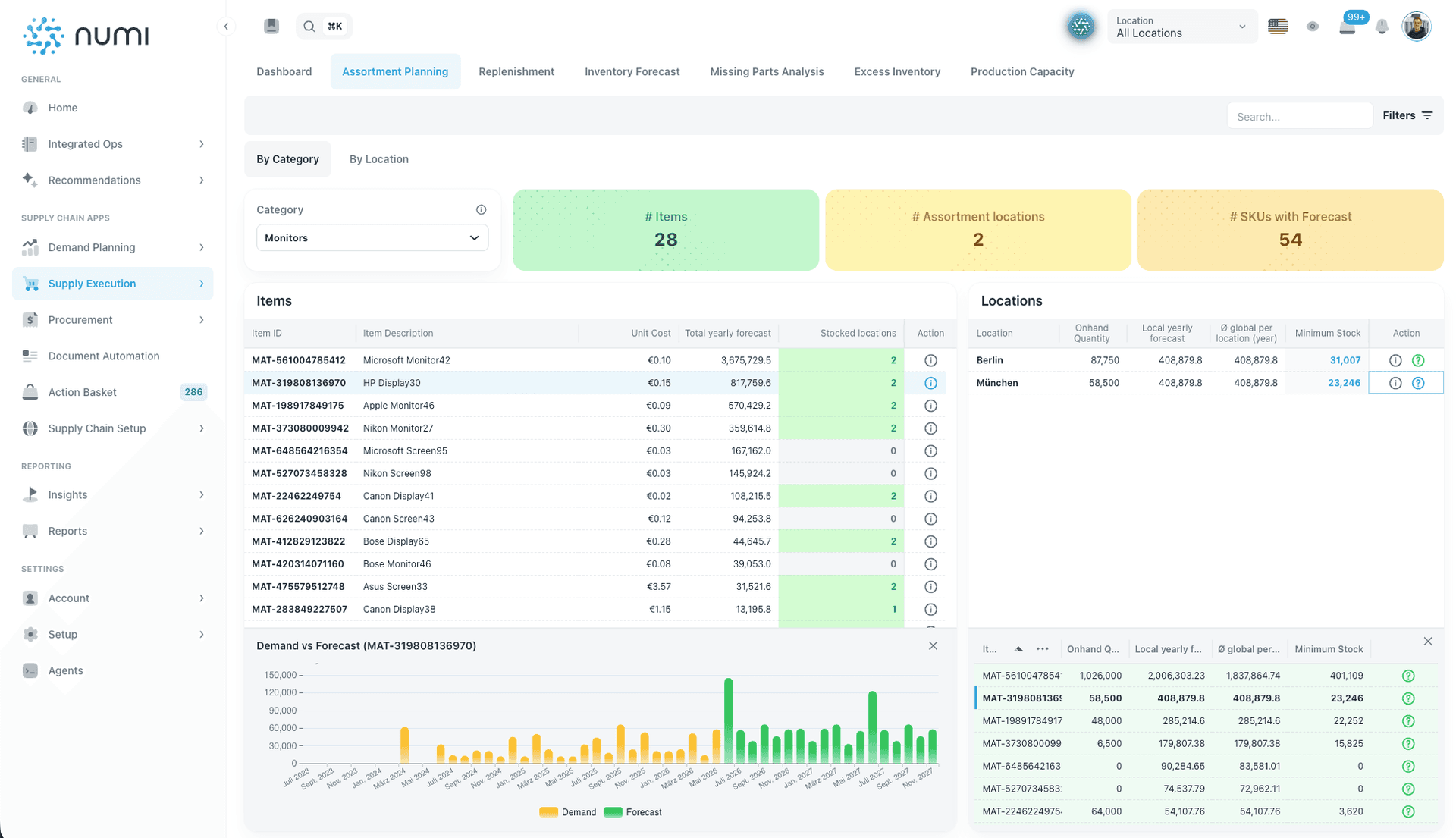
💡 Simulate inventory strategies risk-free with numi. In a 30-minute intro call, clarify your biggest levers to reduce inventory by 15–30% – without risking service levels. → Book an intro call
5 strategies to reduce inventory
The following five strategies help you reduce inventory levels in a targeted way, free up tied-up capital, and build a more resilient supply chain.
1. Multi-dimensional inventory segmentation: Going beyond classic ABC/XYZ analysis
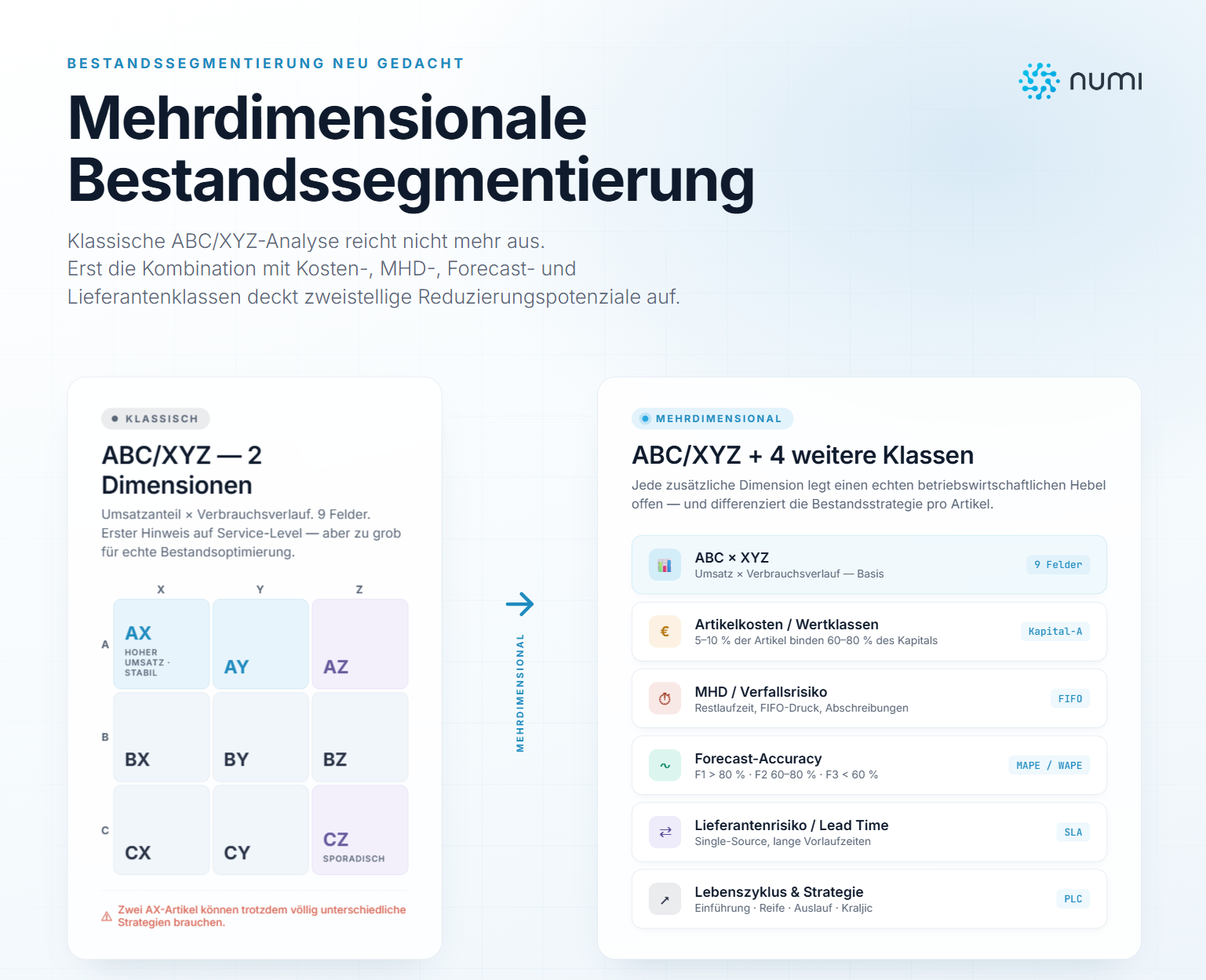
The ABC/XYZ analysis has been the standard entry point into inventory segmentation for decades – and that's exactly its problem: it has become a basic tool that on its own is no longer sufficient to deliver meaningful inventory reductions. Companies that want to reduce inventory sustainably today need a multi-dimensional segmentation approach that incorporates additional business and operational dimensions.
The limits of classic ABC/XYZ segmentation
A pure ABC/XYZ analysis combines two dimensions:
- ABC classes (revenue or volume share): A = high revenue, C = low revenue
- XYZ classes (consumption pattern): X = stable, Z = sporadic / volatile
This creates 9 fields (AX to CZ) and provides a first indication for service level differentiation. But: this classification misses critical levers for inventory reduction – such as item costs, expiration risks, or actual forecastability. In practice, two items in the same AX field can require completely different inventory strategies – a high-cost component with long replenishment lead time needs a different approach than a low-cost standard part with short lead time.
Multi-dimensional segmentation: The additional classes
Real inventory reduction is achieved by combining ABC/XYZ with additional business-relevant classifications:
Item cost classes (value classes)
High-cost items tie up disproportionate amounts of capital. Segmentation by unit cost or inventory value identifies the true cashflow drivers in your assortment. In practice, 5–10% of items typically tie up 60–80% of inventory capital. These "capital-A items" deserve their own strategy – for example lower safety stocks, more frequent orders, tighter supplier integration.
Shelf-life classes (expiration risk)
For food, pharma, cosmetics, chemicals, and similar industries, expiration dates are critical. Items with short shelf life require more aggressive inventory strategies: lower days-on-hand, FIFO control, early sell-off recommendations. Segmentation by remaining-life risk prevents write-offs and drastically reduces usable inventory.
Forecast accuracy classes
The XYZ analysis only measures demand volatility – it says nothing about how well a forecast actually works. A Z-item with sporadic demand can be highly forecastable (e.g. seasonal patterns), while an X-item with high volume can suddenly go off-track.
A classification by forecast accuracy (e.g. MAPE, WAPE, Bias) is therefore a much more precise indicator of the required safety stock:
- F1 (forecast accuracy > 80%): low safety stock possible
- F2 (60–80%): moderate safety stock
- F3 (< 60%): high safety stock or alternative strategies (Kanban, VMI, consignment)
Additional relevant dimensions
- Supplier risk / lead-time classes: long lead times or single-source items require higher safety stock
- Lifecycle classes: introduction, growth, maturity, or end-of-life phase
- Strategic classes: differentiation between C-parts, standard parts, strategic parts (Kraljic matrix)
- Storage and handling cost classes: oversized, hazardous, refrigerated
Example: How the combination plays out
An item in the classic AX segment (high revenue, stable demand) would be assigned a 99% service level by textbook logic. Enrich this classification, and the picture becomes more differentiated:
This multi-dimensional view uncovers optimization potential that remains invisible in a pure ABC/XYZ analysis – and this is typically where double-digit percentage points of inventory reduction are hiding.
💡 numi automates multi-dimensional inventory segmentation. Instead of manual Excel classifications, numi combines item costs, shelf-life risk, and forecast accuracy automatically – and delivers concrete recommendations per item. → Book an intro call
2. Improve forecast accuracy and reduce safety stock
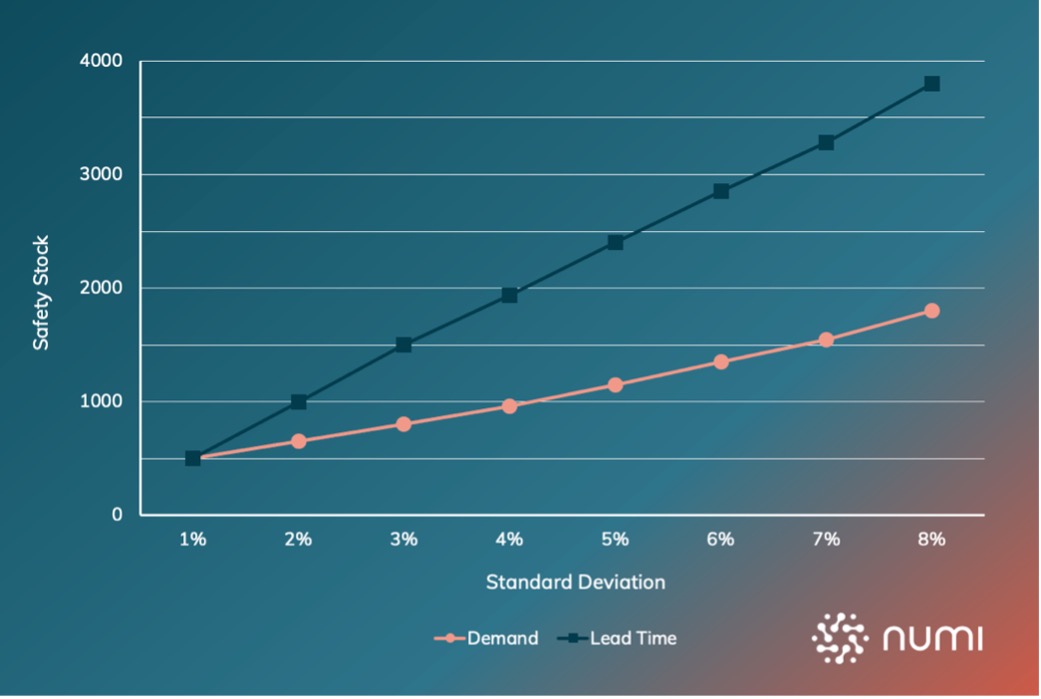
The safety stock is a substantial portion of your total inventory and therefore a central lever for reducing inventory levels and lowering capital binding. Safety stock can be defined as:

The formula contains parameters for the standard deviation of demand and lead time. Both parameters can be reduced by using forecast errors instead of the standard deviation of historical demand. A more accurate forecast – achieved through AI-based methods – delivers a significant inventory reduction at the same service level. The same applies to lead-time forecasts and their errors. A detailed summary of concepts to improve demand and supply forecasting can be found in our article on resilient demand planning.
The effect of reduced variability is illustrated in the table below. Volatility in demand or lead time increases the safety stock. Lead-time variability typically has a stronger impact on safety stock than demand volatility, as a customer simulation we performed shows.
💡 Better forecasts = lower safety stocks = more free cashflow. numi uses AI-powered forecasts to optimize your inventory parameters automatically. Learn more about numi Supply Chain →
3. Reduce order quantities and increase order frequency
Economic and discounted order quantities help purchase cost-optimized volumes in periods of stable supply and demand. In current environments with long lead times and increasing demand volatility, these concepts deserve a re-evaluation.
Ordering smaller quantities more frequently can contribute significantly to reducing inventory levels. It also makes you considerably more flexible in responding to demand changes.
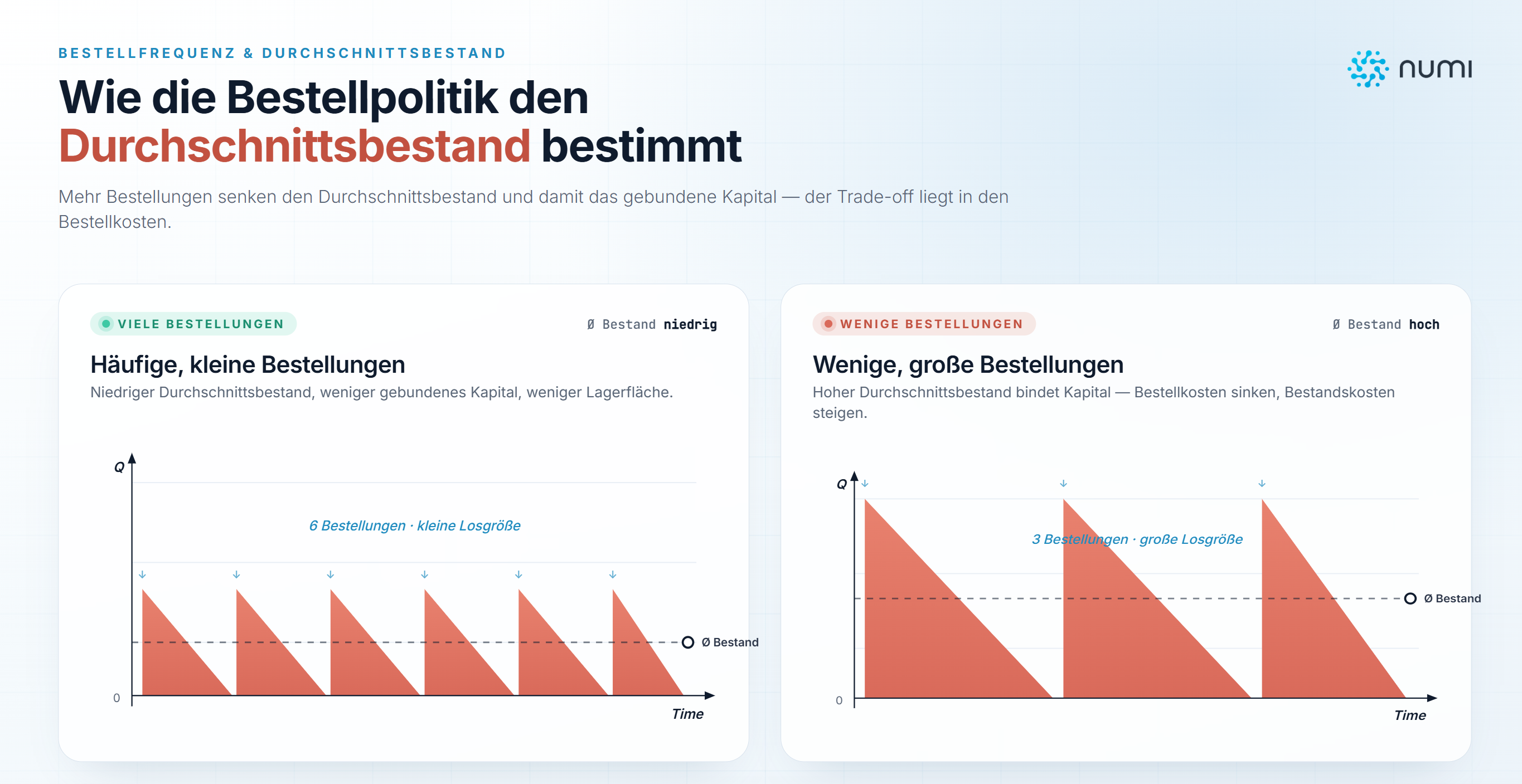
Of course, you may have long-term supplier contracts with minimum order quantities; therefore, a critical assessment of costs, minimum order quantities, and discounts per supplier and product is required.
Consider different scenarios and discuss them with your suppliers. Compare minimum batch sizes, optimal batches, and unit costs in each case against your risks and the cost of managing additional inventory. The math typically shows: smaller batch sizes combined with higher shipping frequency reduce inventory and carrying costs.
4. Optimize network inventory: Multi-echelon inventory optimization
Another aspect of inventory reduction is leveraging the inventory across your entire network.
In a setup where local warehouses can be replenished from a few central hubs or other local warehouses, automated and cost-optimized replenishment recommendations help avoid long lead times or unnecessarily built-up inventory at each node of the supply chain.
This multi-echelon inventory optimization approach helps reduce total network inventory by setting the right inventory parameters at each location. Identifying non-movers at the local warehouse level and reallocating them to markets with active demand can also be a major lever for inventory reduction.
5. Sell off excess stock: Strategies against slow-movers and dead stock
Often there are situations where inventory has built up and somehow needs to be sold off. First, you need to identify suitable products for such actions. This is typically a joint task of data analytics and human expert judgment. For high-value items with negative demand trends, product or category expertise should be involved.
Some proven sell-off strategies for inventory reduction:
- Promotions: price reductions are a strong option, especially in e-commerce, to reduce large volumes of slow-moving inventory
- Inventory kitting: also known as product bundling or cross-selling. "Buy one get one free" or bundling slow-movers with sales items. Often effective: combining dead stock with sought-after products
- Consignment inventory: if you can't sell the inventory yourself, a retailer or wholesaler may be better positioned. A consignment agreement with another company or a liquidation retailer can be a solution
- Charity: charities will happily accept your products – and depending on tax law, you may even be eligible for a tax write-off
These strategies for reducing inventory levels are particularly effective in periods of declining or stagnating demand. Some carry a higher risk of stock-outs. These conflicting goals must be weighed against your current business objectives.
Frequently asked questions about inventory reduction
What is inventory reduction?
Inventory reduction refers to the targeted lowering of inventory levels to free up tied-up capital and reduce carrying costs – without compromising service levels. It is a central lever in working capital management and supply chain optimization.
How can I reduce my inventory?
Effective levers for reducing inventory levels include: multi-dimensional inventory segmentation (ABC/XYZ combined with item costs, shelf life, and forecast accuracy), more accurate demand forecasts to reduce safety stock, smaller order quantities at higher order frequency, multi-echelon inventory optimization across the network, and targeted sell-off of excess inventory and slow-movers.
How much inventory can typically be reduced through optimization?
Experience values show reduction potentials between 15% and 30%, depending on industry, assortment breadth, and current optimization level. Holistic approaches that go beyond inventory structures to include value-chain processes deliver the most sustainable results.
What is the difference between inventory reduction and inventory optimization?
Inventory reduction focuses primarily on lowering inventory volume and thus tied-up capital. Inventory optimization is broader and seeks the optimum balance between carrying costs, capital binding, and service level. In practice, inventory reduction is typically a sub-goal of the overarching inventory optimization.
How does inventory reduction impact cashflow?
Every dollar of reduced inventory becomes free cashflow. A 20% inventory reduction on a $10M inventory equals $2M in freed-up working capital – capital available for investment, debt reduction, or growth.
What role do AI and software play in inventory reduction?
Modern supply chain software with AI-powered forecasting can optimize inventory parameters automatically, detect demand anomalies early, and generate replenishment recommendations per warehouse and item. This reduces forecast errors and the required safety stock significantly.
Is ABC/XYZ analysis enough for inventory reduction?
No. The ABC/XYZ analysis is a good starting point but falls short. For sustainable inventory reduction, you should incorporate additional dimensions: item cost classes (capital binding), shelf-life classes (expiration risk), forecast accuracy classes (true forecastability), supplier risk, and lifecycle stage. Only multi-dimensional segmentation reveals the optimization potential that remains invisible in the classic 9-field matrix.
Which KPIs should I track for inventory reduction?
Key metrics for inventory optimization include: inventory turnover, days of inventory on hand, service level, share of slow-movers and dead stock, capital binding, and carrying cost rate.
Conclusion: Inventory reduction as a strategic lever
Reducing inventory levels is one of the most effective levers for improving cashflow and profitability in today's interest-rate environment. By combining the five strategies presented – multi-dimensional segmentation, better forecasts, adjusted order policy, multi-echelon optimization, and targeted sell-off – companies typically achieve 15–30% inventory reduction.
The key is the right balance between inventory levels and service capability: blanket inventory reductions without data-driven segmentation jeopardize customer service and are not sustainable.
🚀 numi supports your inventory reduction – data-driven and AI-powered. In our simulation environment, test different inventory optimization strategies and see the impact on inventory level, service level, and cashflow – before you implement. → Book an intro call
Further reading
Sources
[1] Nike Q1 revenue up, profit margin down due to rising costs, inventory issues – The Fashion Law